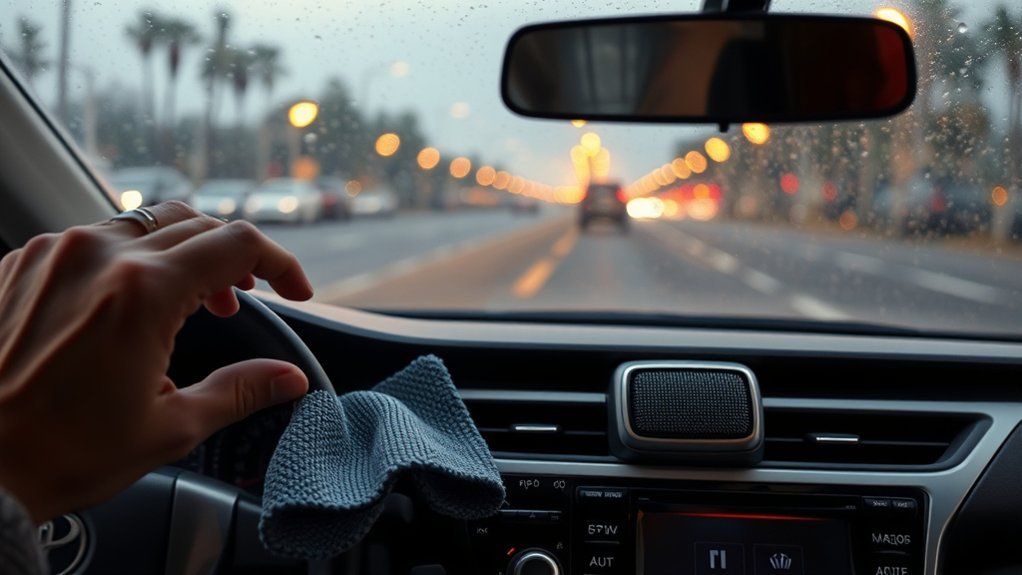
Foggy windows in a Toyota Camry usually mean the cabin has too much moisture, the glass is colder than the air around it, or the HVAC system is not moving dry air across the windshield fast enough. The fastest fix is to use the defrost setting, turn A/C on, switch to fresh-air mode, raise the fan speed, and wait until the windshield and front side glass are clear before driving.
Quick Answer
To stop Camry windows from fogging, set the airflow to Defrost, turn A/C on, use warm air, turn recirculation off, and raise the fan speed. Then remove cabin moisture by drying wet mats, replacing a clogged cabin filter, cleaning the inside glass, and checking for leaks if fog keeps coming back.
Key Takeaways
- For inside windshield fog, use Defrost + A/C + fresh-air mode, not recirculation.
- Clean interior glass matters because oily film and dust give moisture more places to cling.
- A clogged cabin air filter, weak blower, wet carpets, or blocked vents can make defogging slow.
- A sweet coolant smell, greasy windshield film, or damp passenger-side carpet can point to a heater-core leak.
- If fog returns after normal defrosting, look for a moisture source instead of only wiping the glass.
At a Glance
| Time Required | 30 seconds to 10 minutes for quick defogging; 15–30 minutes for basic checks |
| Difficulty | Easy for HVAC settings and cleaning; moderate for leak diagnosis |
| Tools Needed | Microfiber towels, automotive glass cleaner, flashlight, replacement cabin filter if needed |
| Cost | $0–$25 for cleaning and filter checks; more if HVAC or leak repairs are needed |
Warning: Do not drive until the windshield, front side windows, rear glass, and mirrors are clear enough for full visibility. If the glass is icy, do not pour hot or warm water on it; the temperature shock can crack the windshield.
Quick Fixes to Clear a Camry Windshield Now
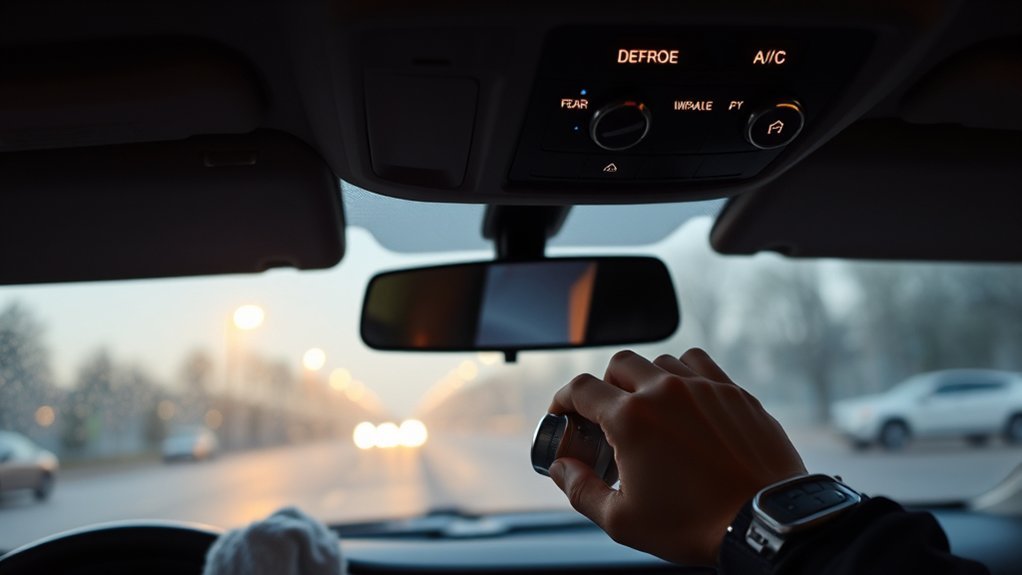
When your Camry windshield fogs up, use a simple sequence instead of guessing at the climate controls:
- Press Defrost. This directs airflow to the windshield and usually the front side glass.
- Turn A/C on. A/C dries the air before it reaches the glass, even when you are using heat.
- Use warm air. Warm, dry air helps evaporate moisture on the inside of the glass.
- Turn recirculation off. Fresh outside air helps replace humid cabin air.
- Raise the fan speed. More airflow clears the windshield faster.
- Crack a window briefly if safe. This can help equalize humidity, especially when the cabin is very damp.
- Wipe only if you must. Use a clean microfiber towel so you do not leave streaks that make the next fogging episode worse.
On newer Camry models, Toyota notes that turning A/C on dehumidifies the air and helps defog effectively, while recirculated air can make windows fog more easily. Check the owner’s manual for your exact model year because buttons and automatic climate-control behavior can vary.
Pro Tip: Keep one clean microfiber towel in the door pocket and use it only for glass. Towels used on dashboards or trim can carry oils that smear the windshield.
Set Climate Controls for a Clear Windshield
The best Camry defog setting is not simply “hot air.” It is warm, dry, fresh air aimed at the glass. Use this setup for interior fog:
| Control | Best setting for inside fog | Why it helps |
|---|---|---|
| Airflow mode | Defrost | Aims air at the windshield and front side glass. |
| A/C | On | Removes moisture from the air before it reaches the glass. |
| Temperature | Warm to hot | Helps evaporate condensation from the inside surface. |
| Air intake | Fresh air / outside air | Replaces damp cabin air instead of recirculating it. |
| Fan speed | Medium-high to high | Moves enough air to clear the glass quickly. |
After the windshield clears, you can lower the fan speed for comfort. If your Camry has a rear defogger or heated mirrors, turn them on when rear glass or mirror fog limits visibility.
Why Camrys Fog: Common Causes Inside and Out
Fog is condensation. It forms when moist air meets glass that is colder than the air around it. In a Camry, the moisture usually comes from breathing, wet shoes, damp floor mats, rain-soaked clothing, a water leak, or recirculated cabin air.
Inside Fog vs. Outside Fog
Inside fog usually appears in cold, rainy, or humid weather when warm cabin air hits the cooler windshield. Use Defrost, A/C, warm air, and fresh-air mode.
Outside fog often happens in warm, humid weather when the windshield is cooled by A/C and moist outside air condenses on the outer glass. Use the wipers, slightly reduce A/C cooling, and direct warmer air toward the windshield until the glass temperature balances out.
Common Moisture Sources in a Camry
- Wet floor mats, umbrellas, jackets, or shoes left in the cabin
- Dirty interior glass with oily film from plastics, smoke, skin oils, or cleaning residue
- Clogged or dirty cabin air filter reducing defrost airflow
- Weak blower motor or blocked vents
- Door, trunk, windshield, cowl, or sunroof drain leaks
- A/C evaporator drain problems that leave moisture under the dash
- Heater-core leaks that add coolant vapor and moisture to the cabin
Best Windshield Cleaners and How to Apply Them
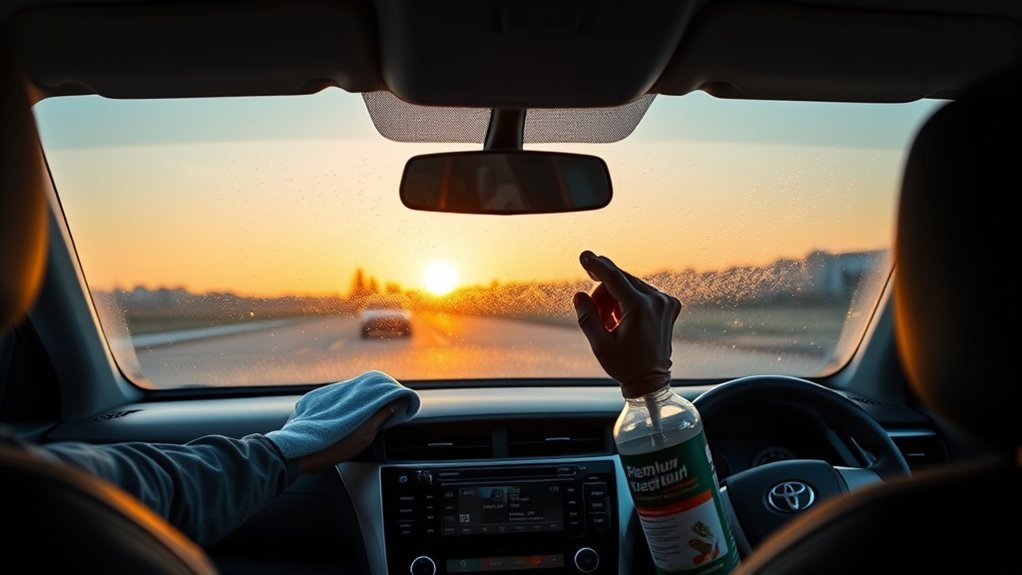
Clean glass fogs less and clears faster. Choose an automotive glass cleaner that is labeled streak-free and safe for tinted windows if you are cleaning side or rear glass with aftermarket tint. Avoid greasy household cleaners, abrasive pads, and products that leave a silicone-like film on the inside windshield.
Choosing the Right Formula
For routine cleaning, use an ammonia-free automotive glass cleaner and two microfiber towels: one for cleaning and one for drying. If your Camry frequently fogs in damp weather, add a dedicated automotive anti-fog treatment after the glass is completely clean and dry. Follow the product directions for cure time and reapplication.
Proper Application Technique
- Park in shade so cleaner does not dry too quickly.
- Spray the towel, not the dashboard, to avoid overspray on trim.
- Wipe the inside windshield in overlapping passes.
- Flip to a dry towel and buff until the glass is clear.
- Use vertical strokes on the inside and horizontal strokes outside so you can tell which side has streaks.
Clean the inside windshield whenever you notice haze around headlights at night, streaks after wiping, or fog that returns faster than usual.
Check AC, Blower, and Cabin Filter Before You Drive
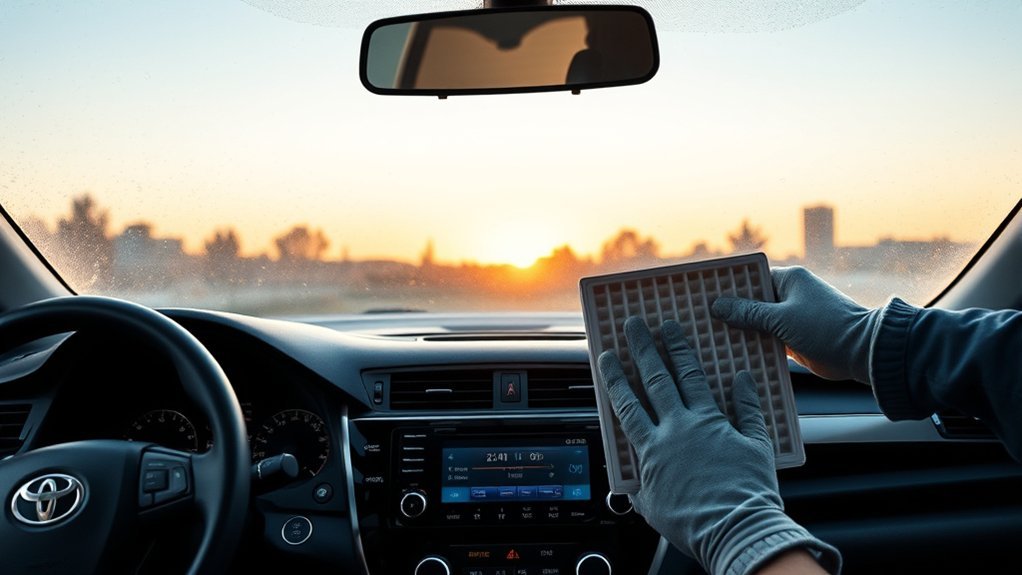
Moisture control starts with airflow. If the HVAC system cannot move enough dry air across the windshield, the glass will clear slowly no matter how clean it is.
- Test every fan speed. Weak or uneven airflow can point to a blower, resistor, control, or filter problem.
- Check the cabin air filter. A clogged filter can reduce airflow through the defrost vents. Inspect and replace it according to your Toyota maintenance guide, and sooner in dusty areas.
- Confirm A/C performance. If the air never feels cool or dry, the system may not be removing humidity properly.
- Keep vents clear. Papers, dash covers, or debris near defrost outlets can block air from reaching the glass.
- Use the correct intake mode. For interior fog, fresh-air mode usually works better than recirculation.
Note: Some automatic climate systems change fan speed, A/C, and air intake on their own in Defrost mode. If the windshield is not clearing, manually check that A/C is on and recirculation is off.
Signs of Moisture: Leaks, Wet Carpets, and Heater-Core Clues
If your Camry fogs every morning, fogs even in dry weather, or smells musty, the problem may be extra moisture trapped inside the vehicle. Start with the easy checks before replacing parts.
Detecting Interior Water Damage
Lift the floor mats, press your hand into the carpet, and check under the edges of the trim. Moisture can hide in the padding even when the top of the carpet looks dry. Also inspect the trunk, spare tire well, door seals, windshield edges, and sunroof drains if your Camry has a sunroof.
| Location checked | What to look for | Likely next step |
|---|---|---|
| Trunk seams / spare tire well | Damp trim, pooled water, mildew smell | Inspect trunk seals and taillight seals. |
| Carpet base | Wetness, musty odor, soaked padding | Dry thoroughly and trace the water source. |
| Door/window seals | Cracks, gaps, flattened rubber | Clean, reseat, or replace damaged seals. |
| Dash / passenger footwell | Damp carpet, coolant smell, sticky film | Check for heater-core or A/C drain issues. |
Heater-Core Leak Indicators
A heater-core leak is not the most common cause of fog, but it is one of the most important to catch. Look for a sweet syrup-like coolant smell, damp passenger-side carpet, low coolant level, greasy film on the inside windshield, or fog that gets worse when heat or Defrost is on.
If you suspect coolant vapor, do not ignore it. Coolant loss can lead to overheating, and coolant residue on the glass can smear badly when wiped. Have the cooling system pressure-tested and the heater core inspected by a qualified technician.
Troubleshooting Camry Window Fog
| Symptom | Likely cause | Best fix |
|---|---|---|
| Fog forms inside right after you start driving | Humid cabin air, wet mats, recirculation on | Use Defrost + A/C + fresh air; dry the cabin. |
| Fog is outside on a warm humid day | Windshield cooled by A/C | Use wipers, reduce cooling slightly, warm the glass. |
| Defrost airflow feels weak | Clogged cabin filter, blower issue, blocked vents | Replace filter, clear vents, test blower speeds. |
| Fog returns every morning | Wet carpet, leak, trapped cabin moisture | Inspect carpets, trunk, seals, drains, and mats. |
| Fog has a sweet smell or greasy film | Possible heater-core leak | Check coolant level and get professional diagnosis. |
Prevent Fog Long-Term: Anti-Fog Treatments and Glass Protection
An automotive anti-fog treatment can help, but it works best after you solve the moisture source. Apply it only to clean, dry interior glass and follow the product directions exactly. Too much product or poor buffing can leave a haze that makes nighttime glare worse.
- Select a product labeled for automotive interior glass.
- Clean the windshield first so the coating bonds evenly.
- Apply a thin layer; more product is not better.
- Let it cure for the time listed on the label.
- Reapply on the product’s schedule, especially before cold or rainy seasons.
For the outside windshield, a water-repellent glass treatment can help rain bead and roll away, but it is not a substitute for good wiper blades, washer fluid, or a working defrost system.
What Not to Do When Camry Windows Fog
- Do not keep driving with limited visibility. Pull over safely and clear the glass first.
- Do not use hot water on icy glass. Sudden temperature change can crack the windshield.
- Do not use a metal scraper. It can scratch glass and damage tint or defroster lines.
- Do not wipe with your sleeve or paper towels while driving. This can smear oils and distract you.
- Do not rely on recirculation for interior fog. It can trap humid air inside the cabin.
When to Get Professional Repairs for Persistent Fogging
Get professional help if your Camry’s windows keep fogging after you use the correct climate settings, clean the glass, replace a dirty cabin filter, and dry the interior. A technician can check the A/C system, blower operation, blend doors, evaporator drain, body leaks, trunk seals, windshield seal, and heater core.
Book service sooner if you notice any of these signs:
- Sweet coolant smell inside the cabin
- Low coolant with no obvious external leak
- Damp carpet that returns after drying
- Fog that will not clear with Defrost and A/C
- Weak airflow from defrost vents on every fan setting
- Water in the trunk or spare tire well
Frequently Asked Questions
How do I stop my car windows from fogging up inside?
Use Defrost, turn A/C on, set the temperature warm, turn recirculation off, and raise the fan speed. Then reduce cabin moisture by drying wet mats, removing damp items, cleaning the inside glass, and checking for leaks if the fog keeps returning.
How do I defrost Camry windows quickly?
Press the front Defrost button, turn A/C on, use warm air, select fresh-air mode, and increase the fan speed. Turn on the rear defogger for the back glass and heated mirrors if your Camry has them. Wait until the glass is clear before driving.
Should I use hot or cold air to defog a Camry windshield?
For inside fog, warm air with A/C on usually works best. The A/C dries the air, and the heat helps evaporate moisture from the glass. Cold A/C alone can sometimes make the windshield surface colder, which may worsen outside condensation in humid weather.
Why does my Camry windshield fog even with the defroster on?
The usual causes are recirculation mode, A/C turned off, a clogged cabin air filter, weak blower airflow, dirty interior glass, wet carpets, or a water leak. If the fog has a sweet smell or greasy film, have the heater core checked.
Can a dirty cabin air filter cause foggy windows?
Yes. A clogged cabin air filter can reduce airflow through the HVAC system, including the defrost vents. Less airflow means the system takes longer to remove moisture from the windshield. Inspect and replace the filter according to your Toyota maintenance guide.
Conclusion
You can stop most Toyota Camry window fog by using the HVAC system correctly: Defrost on, A/C on, warm air, fresh-air mode, and enough fan speed to move dry air across the glass. For long-term prevention, keep the inside windshield clean, replace a dirty cabin filter, dry wet mats, and fix leaks quickly. If fog keeps returning or you smell coolant, get the car inspected so a small moisture problem does not turn into a safety issue.
Sources
- Toyota 2025 Camry Hybrid Owner’s Manual: Automatic Air Conditioning System — supports A/C dehumidification and recirculation/fogging guidance.
- Toyota Manuals and Warranties: Camry — supports checking the owner’s manual and maintenance guide for the exact model year.
- eCFR 49 CFR 571.103: Windshield Defrosting and Defogging Systems — supports the safety importance of windshield defrosting and defogging systems.
- AAA: How to Quickly Defrost Your Car Windows — supports safe defrosting, avoiding hot water, and using A/C/defrost for condensation.
- AAA Club Alliance: The Best Ways to Defog Your Vehicle’s Windows — supports inside/outside fog causes and fresh-air guidance.
- AutoZone: Signs That Your Car Heater Core Is Leaking — supports sweet coolant smell, foggy windshield, and damp floor mat warning signs.