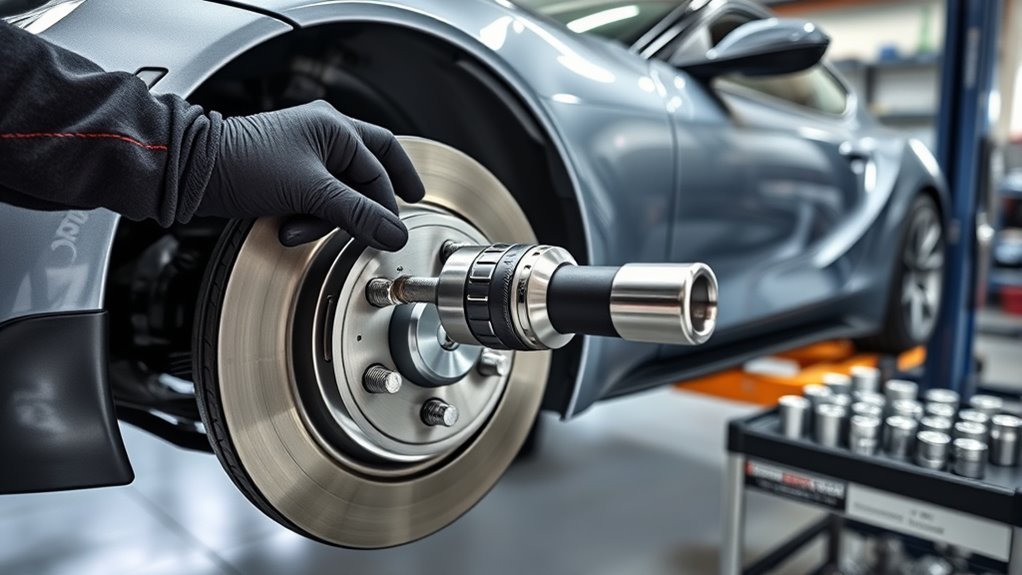

When selecting brake pads for your Toyota Supra, you’ll encounter organic, semi-metallic, and ceramic materials. Organic pads offer quiet performance but wear quickly, making them less suitable for aggressive driving. Semi-metallic pads excel in heat dissipation, ideal for spirited driving, though they can be noisy. Ceramic pads provide durability and low dust, ensuring consistent performance. Each material affects longevity and handling differently, so understanding their properties is essential for optimizing your driving experience. Discover more about the best choices for your needs.
Why Brake Pads Are Essential for Performance and Safety in Your Supra
When you’re pushing your Toyota Supra to its limits, the importance of brake pads becomes glaringly obvious. These components are vital for ensuring effective stopping power, particularly at high speeds. Choosing the right brake pads directly impacts your vehicle’s safety and performance. High-performance options, like the CSG Spec CP, enhance brake pad longevity and offer superior bite and fade resistance, essential for aggressive driving scenarios. Regular inspections and timely replacements are important; neglecting them can lead to dangerous brake fade. Proper brake pad selection not only improves stopping power but also enhances handling and control, allowing you to fully embrace your Supra’s capabilities on the track and the road. Prioritize your brake pads to realize your driving potential.
What You Need to Know About Different Brake Pad Materials
Understanding the various brake pad materials is essential for maximizing your Toyota Supra’s performance and safety. Each type offers unique characteristics that influence brake pad longevity and heat dissipation. Here’s a quick breakdown:
- Organic Brake Pads: Quieter but wear faster under high-performance conditions.
- Semi-Metallic Brake Pads: Contain 30% to 70% metal, providing excellent heat dissipation and stopping power, ideal for spirited driving.
- Ceramic Brake Pads: Durable with low dust production, offering consistent performance for daily commuting.
- Heat Resistance: Semi-metallic and ceramic pads handle higher temperatures better, while organic pads can fade quickly.
Choosing the right material for your driving style guarantees peak braking performance, enabling you to enjoy every ride with confidence.
Organic Brake Pads: Pros and Cons for Daily Driving
When considering organic brake pads for your Toyota Supra, you’ll find they offer a quiet and eco-friendly option for daily driving. While they excel in initial bite and produce less dust, their performance may decline in extreme conditions and with aggressive driving. It’s important to weigh these advantages against their limitations to determine if they’re the right choice for your needs.
Performance Characteristics Overview
While organic brake pads offer a quieter and smoother driving experience, their performance characteristics reveal both advantages and limitations for daily driving. Here’s what you need to know about these brake pad types:
- Quieter Operation: Their composition of rubber and resin minimizes noise during braking.
- Moderate Friction: They provide adequate stopping power for everyday use, suitable for most drivers.
- Dust Management: Organic pads generate less dust compared to semi-metallic options, keeping wheels cleaner.
- Wear Rate: They wear out faster under high-performance conditions, necessitating more frequent replacements.
These performance factors highlight their suitability for daily driving but also caution against aggressive use or extreme weather conditions. Understanding these nuances will help you make informed choices for your Toyota Supra.
Advantages for Daily Use
Organic brake pads offer several advantages for daily use, particularly for drivers seeking a smooth and quiet ride. Their composition of rubber, resin, and fibers enhances brake noise reduction, ensuring a less intrusive driving experience. Additionally, these pads produce minimal dust accumulation, keeping your wheels cleaner and maintaining an aesthetically pleasing appearance over time. Suitable for everyday driving, organic pads deliver moderate friction, providing adequate stopping power for urban commutes. They effectively balance performance and comfort in typical conditions, making them a solid choice for most drivers. While they may not excel in extreme weather or high-performance scenarios, their advantages for daily use make them an appealing option for those prioritizing a harmonious driving experience.
Limitations and Drawbacks
Despite their advantages for daily driving, organic brake pads come with notable limitations. Their design, while quiet, poses several challenges that can affect your driving experience:
- Short organic pad lifespan: They tend to wear out faster, especially in aggressive driving scenarios.
- High performance limitations: Under high speeds, their moderate friction can lead to quick fade, compromising safety.
- Weather sensitivity: Performance may drop in extreme conditions, limiting their versatility.
- Heat dissipation issues: They struggle to manage heat, making them less effective for spirited driving or track use.
In essence, while they’re suitable for everyday commuting, their drawbacks can hinder performance when you need it most.
Evaluating Semi-Metallic Brake Pads for Performance Driving
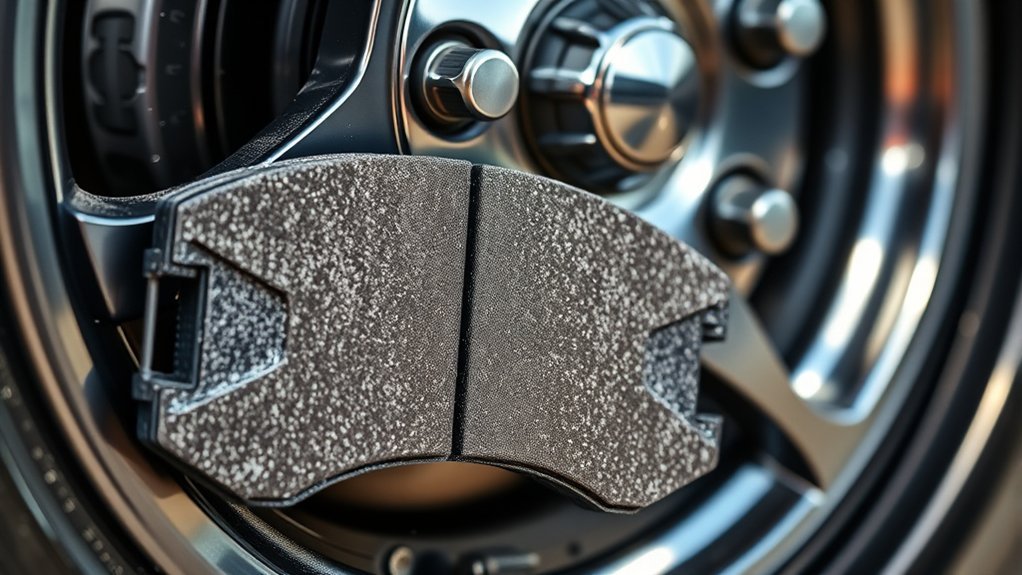
When you push your Toyota Supra to its limits on the track, the choice of brake pads plays an essential role in performance. Semi-metallic brake pads, consisting of 30% to 70% metal like copper and steel, excel in heat dissipation, vital for high-speed driving. Their efficient heat management minimizes brake fade, allowing you to maintain control during intense sessions. You’ll find that these pads require less pedal pressure for effective stopping, enhancing your driving experience. However, be aware that they can produce higher noise levels and may accelerate rotor wear compared to organic or ceramic options. Consider pads like EBC RP-X or Project Mu RC09 for peak performance, but prepare for the trade-offs in dust and sound.
The Benefits of Ceramic Brake Pads for Commuters
For daily commuting, ceramic brake pads stand out as an ideal choice. Their ceramic advantages make them particularly beneficial for your routine drives:
- Longevity: Dense ceramic compounds typically last longer than organic pads.
- Quiet Operation: You’ll appreciate the minimal noise, creating a more peaceful driving experience.
- Low Dust Production: Enjoy clean wheels with reduced brake dust, a key commuting benefit.
- Consistent Performance: They maintain reliable stopping power across various temperatures and driving conditions.
While they may cost more upfront, their durability leads to lower long-term expenses. With less brake fade, ceramic pads enhance your overall driving confidence and comfort, making them a smart investment for everyday commuters.
Key Criteria for Choosing the Right Brake Pad Material
Choosing the right brake pad material is essential for enhancing your vehicle’s performance and safety. Start by evaluating your driving style; semi-metallic pads excel in high-performance scenarios, while ceramic pads suit everyday commuting. Assess heat resistance—products like Project Mu RC09 thrive in high temperatures, unlike OEM pads that may fade. Longevity and rotor wear are critical; consider options like Endless MX72 for durability without excessive rotor damage. Noise and dust production also matter; organic pads are quieter and produce less dust, whereas semi-metallic types may be noisier. Finally, balance cost with performance; premium pads like CSG Spec CP may be pricier upfront but can save you on long-term maintenance. Prioritize brake pad compatibility for optimal results.
Common Misconceptions About Brake Pad Performance and Durability
How well do you understand the nuances of brake pad performance and durability? Many drivers fall prey to brake pad myths and performance misconceptions. Here are four key misunderstandings:
- Uniformity: Not all brake pads perform equally under stress; semi-metallic pads excel in high-performance conditions.
- Organic Superiority: Organic pads aren’t the best for all scenarios; they wear faster and struggle in aggressive driving.
- Noise Levels: Higher noise doesn’t equal lower quality; semi-metallic pads often produce sound due to their metal content, enhancing performance.
- Lifespan: Brake pad longevity varies greatly; ceramic pads generally outlast organic and semi-metallic options, while affecting rotor wear differently.
Understanding these distinctions helps you make informed decisions for your Toyota Supra’s braking system.
Maintenance Tips for Performance Brake Pads
Understanding the intricacies of brake pad performance makes it clear that proper maintenance is essential for maximizing their effectiveness in your Toyota Supra. Regular brake pad inspections are vital; look for signs of wear like thinning material or uneven surfaces. Maintaining proper brake fluid levels is equally important—replace old fluid to prevent moisture buildup, which can cause brake fade. Always follow the manufacturer’s bedding procedure for new performance brake pads to guarantee maximum friction and minimize noise. Periodically clean your brake pads and rotors to reduce dust accumulation that can negatively impact braking performance. Finally, monitor your driving habits, especially during aggressive driving, to extend the lifespan of your performance brake pads and maintain consistent braking response.
Frequently Asked Questions
Does the Supra Have Ceramic Brakes?
The GR Supra is not offered with carbon-ceramic brake rotors from the factory, and the factory pad compound varies by year and market. Aftermarket ceramic pads can reduce dust and noise, but many track-focused drivers choose semi-metallic or dedicated track compounds for repeated high-temperature use.
Conclusion
In the grand circus of automotive performance, your Toyota Supra’s brake pads are the tightrope walkers—balancing safety and speed with every heartbeat of the engine. Choosing the right material is like picking the best clown for a high-stakes act; one wrong choice can lead to a spectacular crash. So, whether you’re cruising or carving corners, remember: invest wisely in your brake pads. After all, you wouldn’t want your Supra to perform a dramatic dive off the tightrope, would you?