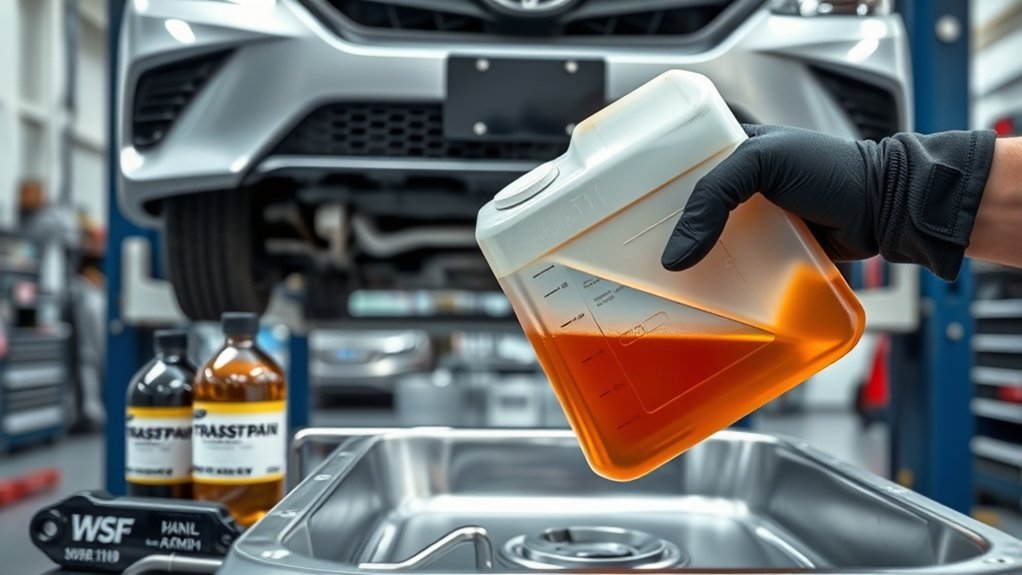
Toyota WS ATF is a factory‑specified, non‑synthetic transmission fluid designed for Toyota Camry hydraulics and friction control, and you should change it on a schedule because it degrades. Expect bright red new fluid; dark or burnt‑smelling oil, slipping shifts, or delayed engagement mean service is overdue. Swap every ~30,000 miles under normal use (up to ~60,000 for towing/off‑road), use the correct WS spec, and follow temperature and fill procedures if you want proper longevity—more specifics follow.
Quick Answer: Does Toyota WS ATF Need Changing?
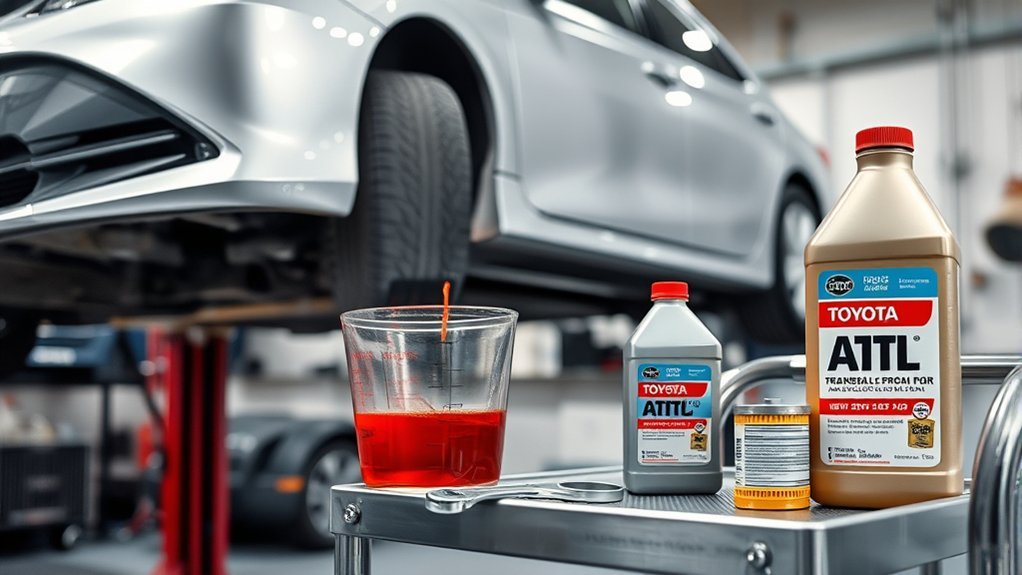
Wondering if Toyota WS ATF needs changing? You should: Toyota WS ATF isn’t lifetime fluid. Under normal conditions change it every 30,000 miles; if you tow or go off-road, extend to 60,000 miles. Over time the fluid darkens, loses lubricity, and risks internal transmission wear. You’ll preserve fluid longevity by following simple maintenance tips: schedule interval-based drain-and-fill, inspect for contamination, and replace filter and pan gasket when applicable. Dealers may downplay changes, but proactive service prevents costly rebuilds and keeps shift quality crisp. Know that Toyota WS is non-synthetic and won’t match synthetic alternatives for shear stability and thermal resistance, so if you demand maximum durability consider alternatives compatible with Toyota specs. Act decisively: track mileage, maintain change records, and don’t accept “lifetime” claims. Those choices free you from preventable failures and extend the transmission’s useful life.
What Toyota WS ATF Is and How It Differs From Synthetic
Although labeled “World Standard,” Toyota WS ATF is a non-synthetic, factory-specified automatic transmission fluid formulated for Toyota gearsets and valve bodies, and it performs differently than true synthetics. You should treat WS as a purpose-built blend: its ATF Composition prioritizes friction characteristics and valve-body hydraulics tailored to Toyota’s designs rather than the extended shear stability and thermal resistance of synthetics. Because chemical manufacturers produce WS under Toyota’s specs, batch formulations can vary, so Fluid Compatibility matters — WS will mate with Toyota seals and clutch materials but won’t inherently match the longevity or high-temperature stability of synthetic ATFs.
You’ll need to follow Toyota’s shorter service interval (about 30,000 miles) to avoid degradation. Using WS where Toyota specifies it preserves shift quality; substituting a synthetic with different friction or solvency can alter shift timing and damage internal components. Maintain regular changes to protect gearing, clutches, and hydraulic control systems, and you’ll keep your transmission liberated from premature failure.
Spot Worn Toyota WS ATF: Color, Smell, and Performance Signs
Check the ATF color regularly: fresh Toyota WS is reddish, but dark or dirty fluid means oxidation and contamination. If you detect a strong burnt or chemical odor, the fluid’s additives have broken down and heat damage is likely. Watch for slipping, delayed shifts, or abnormal noises—these performance symptoms indicate degraded WS fluid and the need for service or replacement.
Color Changes Over Time
When you inspect Toyota WS ATF, fresh fluid will appear bright reddish while darkening to brown or black over time as contaminants and oxidation accumulate, which reduces its lubricating and heat-transfer properties. You should track color changes as a core metric of fluid lifespan and apply maintenance tips promptly. Darkening indicates particulate load, additive depletion, and elevated thermal stress; left unchecked, viscous degradation and wear accelerate. Regular visual checks let you intercept progressive contamination before mechanical damage occurs. Use clear sampling techniques, compare samples against baseline color, and log intervals to quantify degradation rate. Replace fluid according to measured condition rather than arbitrary miles when discoloration or increased particulate is evident. This disciplined approach frees you from premature failure and costly repairs.
Burnt Or Chemical Odor
Color shifts give you an early visual cue, but smell often tells you more about chemistry and performance: a burnt or chemical odor from Toyota WS ATF means the oil’s additives and base stock have chemically broken down, usually from overheating or extended service life. You should act when you detect burnt fluid; the scent indicates lost lubricity and accelerated wear. Perform a chemical analysis if you want definitive degradation markers and to justify repairs.
- Confirm dark, murky color versus fresh reddish WS ATF.
- Note burnt or solvent-like odors during warm engine idle.
- Inspect for overheating sources and external leaks.
- Replace fluid per service interval (≈30,000 miles) or immediately if analysis confirms breakdown.
Take control—preventive maintenance liberates you from avoidable transmission failures.
Slipping And Shift Issues
Transmission performance often gives the earliest sign of degraded Toyota WS ATF: if your Camry hesitates, slips between gears, or exhibits delayed engagement, the fluid has likely lost lubricity and hydraulic integrity from heat or contamination. You should treat slipping and shift hesitation as actionable transmission diagnostics data. Inspect fluid color and smell: darker fluid with a burnt odor confirms overheating or contamination and mandates immediate fluid replacement. If shifts are rough or reluctant, degraded WS ATF has reduced friction control and hydraulic pressure, impairing clutch engagement. You can prevent escalation by following disciplined fluid maintenance—change WS ATF about every 30,000 miles and monitor color/odor regularly. Use this regimen to reclaim control and avoid costly transmission repairs.
Toyota Camry: Recommended WS Service Intervals (Normal, Towing, Off‑Road)
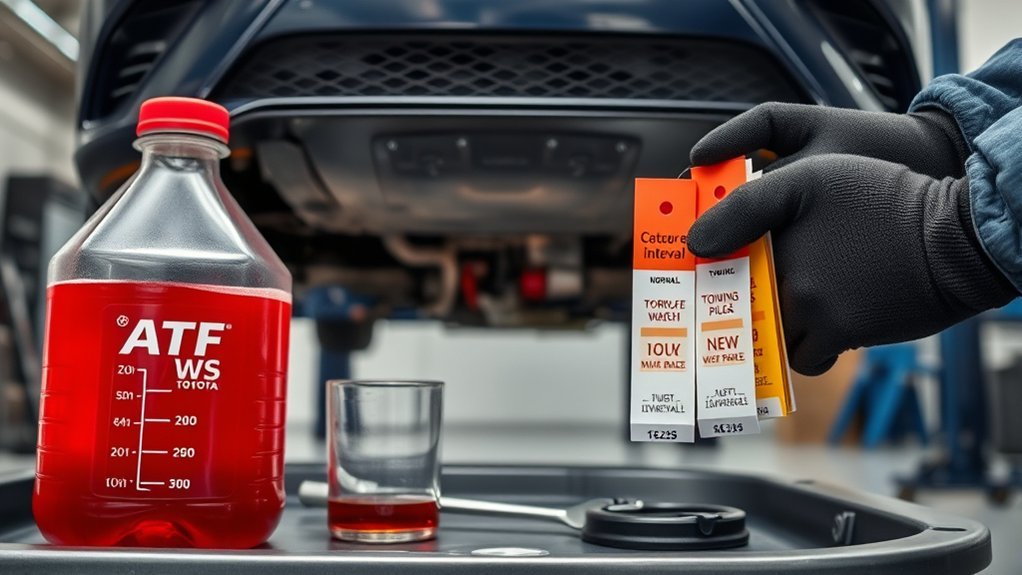
For normal driving, Toyota specifies a WS ATF change every 30,000 miles to keep hydraulic circuits and friction materials within spec. If you tow or run the Camry off‑road, the interval extends to 60,000 miles due to different thermal and load profiles. Sticking to these intervals prevents dark, degraded fluid and reduces the risk of major transmission damage.
Normal Driving Interval
When you drive a Camry under normal conditions, Toyota recommends replacing the WS automatic transmission fluid every 30,000 miles to preserve shifting performance and protect internal components. You’ll keep fluid maintenance disciplined to sustain transmission performance, prevent contaminant buildup, and avoid premature component wear. Inspect color—fresh WS is reddish; darkened fluid signals degradation and the need for service. Follow Toyota’s interval to maintain warranty coverage and mechanical liberty.
- Replace WS ATF at 30,000-mile intervals for normal use.
- Monitor fluid color and smell during routine checks.
- Document service to preserve warranty and resale value.
- Prioritize scheduled changes to prevent costly transmission repairs.
This regimen gives you control, reliability, and freedom from avoidable drivetrain failure.
Towing And Off‑Road
If you haul trailers or tackle rough trails, expect different WS ATF needs than those for normal driving: Toyota recommends a 60,000-mile service interval under towing and off‑road conditions to address increased thermal and mechanical stress on the gearbox. You should treat that interval as a minimum when using advanced towing techniques or frequent off road maintenance tasks; those activities accelerate fluid degradation and increase inspection frequency. Change WS ATF at or before 60,000 miles and inspect sooner if you regularly tow heavy loads, use steep grades, or run in abrasive environments. Neglecting service risks internal wear, clutch damage, and costly repairs. Maintain a predictable schedule, document fluid condition, and choose proper service procedures so you retain vehicle capability and freedom.
Performing a WS Fluid Change: Tools, Temperatures, Dealer vs DIY
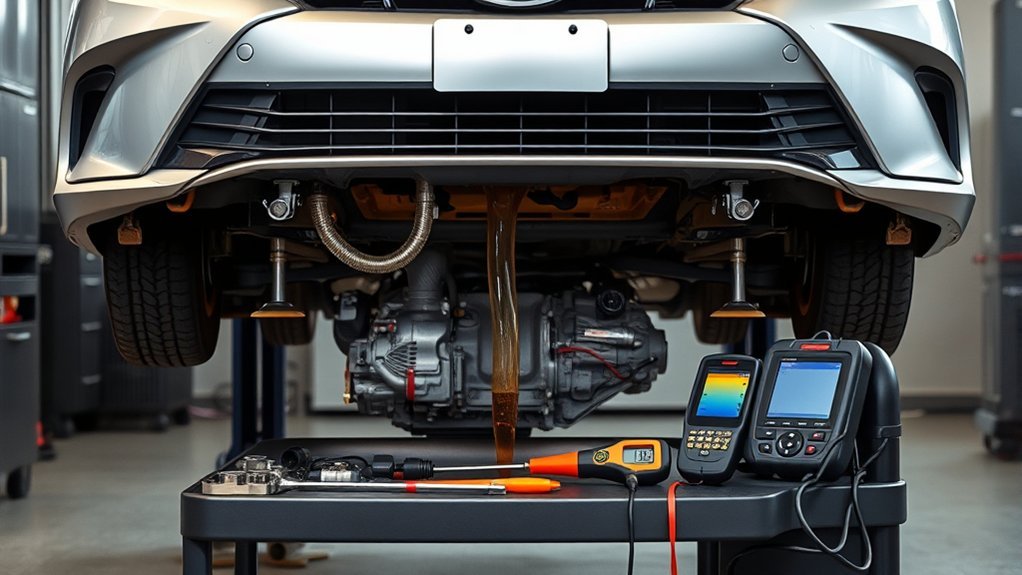
Start by gathering a pump-rated fluid extractor, the correct Toyota WS synthetic ATF, a torque wrench for the drain/fill plugs, and a scan gauge to monitor temperatures; these tools make the procedure accurate and repeatable. Use a fluid change checklist and temperature monitoring to keep control and avoid guesswork. Aim for 95°F–113°F fluid temperature before final fill; a scan gauge simplifies that step.
- Verify WS ATF brand and quantity against spec.
- Warm vehicle to operating temp, then cool into target range.
- Use extractor, torque drain/fill to spec, confirm level.
- Re-scan temps and road-test for seal and shift quality.
Dealers may favor replacement services; you’ll save money and maintain autonomy by doing DIY every ~30,000 miles if you follow specs. Don’t substitute non-synthetic fluids. Be methodical, torque accurately, and validate temperature with the scan gauge to protect transmission longevity and preserve freedom from unnecessary cost.
Common Risks When You Delay WS Fluid Changes
Although it may seem harmless to push intervals, delaying Toyota WS fluid changes reduces lubricity and additive effectiveness, so you’ll accelerate internal wear and raise the likelihood of transmission component failure. You expose clutch packs, bushings and valves to degraded fluid that loses friction control and heat‑dissipation capacity. Fluid contamination darkens WS ATF by ~30,000 miles; letting it persist undermines sealants and antiwear chemistries, increasing leak and failure risk. You need maintenance importance to be more than rhetoric — it’s a liberation from expensive repairs.
| Symptom | Consequence |
|---|---|
| Dark, dirty fluid | Reduced lubricity |
| Additive depletion | Increased wear |
| Contamination | Sealant failure |
| Overheat | Gear damage |
Timely service preserves hydraulic function and friction material life. Delaying beyond recommended 30k (60k when towing) converts a manageable service into potential transmission replacement. You control longevity by scheduling fluid replacement and avoiding the cascade of failures caused by neglected WS ATF.
Choosing the Right Replacement Fluid for Your Camry
When you’re replacing the Camry’s transmission fluid, choose Toyota WS ATF—it’s formulated to meet the valve-body friction characteristics, clutch friction coefficients, and thermal stability Toyota engineers specified. You want predictable shift behavior and longevity, so prioritize factory-specified WS fluid for fluid compatibility; aftermarket alternatives can alter friction and harm the valve body.
- Confirm VS: check your owner’s manual for interval and capacity; follow 30,000-mile guidance as baseline.
- Inspect fluid: dark, burnt-smelling fluid signals degraded lubrication and immediate service.
- Beware dealers pushing “no-change” narratives—maintenance myths can cost you expensive repairs later.
- Consider duty: if you tow or drive harshly, shorten intervals and document service.
You can choose high-quality replacements only if they explicitly meet Toyota WS specifications. Keep records, demand correct fluid, and reject vendors who substitute incompatible products. Liberation here is control: insist on spec-compliant service to preserve performance and avoid preventable failures.
Who Makes WS ATF, What’s in It, and Why It Matters
Because Toyota contracts chemical manufacturers to produce WS ATF to its formula, you should know who makes it and what’s inside to guarantee proper service. Multiple established chemical producers manufacture WS under Toyota’s specs, so supply varies by region; you should verify source when purchasing. The fluid’s non-synthetic base is engineered with targeted additive packages — the additive benefits include improved lubrication, heat control, and enhanced sealing to preserve clutch friction characteristics. Know that formulation impact extends to lifespan: WS’s specific chemistry offers required performance but limits long-term durability compared with full synthetics, so you shouldn’t expect extended drain intervals. Service discipline matters: WS typically needs replacement near 30,000 miles to prevent degradation that leads to slipping or costly repairs. By understanding producer provenance and the exact additive benefits and formulation impact, you reclaim control over maintenance choices, avoid vendor ambiguity, and protect transmission longevity without surrendering authority to assume-it-will-last thinking.
Frequently Asked Questions
Can I Mix WS ATF With Other Transmission Fluids Safely?
No, you shouldn’t mix WS with other fluids; doing so risks degraded transmission performance and voided warranties. Check fluid compatibility precisely, follow manufacturer specs, and use WS-only replacements to preserve reliability and your driving freedom.
Will WS ATF Void My Camry’s Transmission Warranty?
No — using WS ATF alone won’t automatically void warranty coverage, but you’ll need to follow manufacturer specs and documented service procedures; if transmission performance issues arise from improper fluid choices, warranty claims could be denied.
How Does WS ATF Affect Hybrid Camry Transmissions?
An ounce of prevention: you’ll find WS ATF helps hybrid efficiency and transmission longevity by maintaining proper friction, cooling, and valve body operation; you’ll preserve controlled shift timing and reduce wear, supporting reliable hybrid drivetrain freedom.
Can I Reuse Drained WS ATF After Filtering?
No — you shouldn’t reuse drained WS ATF after filtering; filtration and reconditioning techniques can remove particulates but won’t fully restore additives or oxidation stability, risking transmission wear. Seek fresh fluid to protect performance and maintain freedom.
Are There Environmental Disposal Rules for Used WS ATF?
Of course you can ignore laws — but you won’t. You must follow disposal regulations; hazardous waste rules and local recycling programs mandate proper collection and fluid recycling. Contact certified centers; document transfers to avoid fines and environmental harm.
Conclusion
You should change Toyota WS ATF per the service schedule, though real-world evidence suggests moderate driving can extend intervals slightly without immediate harm. WS is a low‑viscosity, heavily additive‑treated synthetic blend designed for tight, modern Toyota transmissions, not interchangeable with Dexron/Mercon. If fluid darkens, smells burnt, or shifts degrade, don’t delay. Use genuine Toyota WS or an approved equivalent, follow temp and fill procedures precisely, and remember contaminated or incorrect fluid accelerates wear.